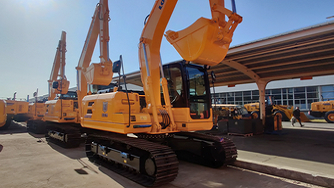
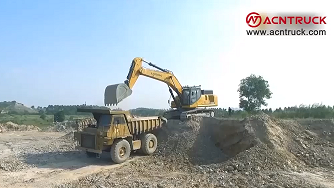
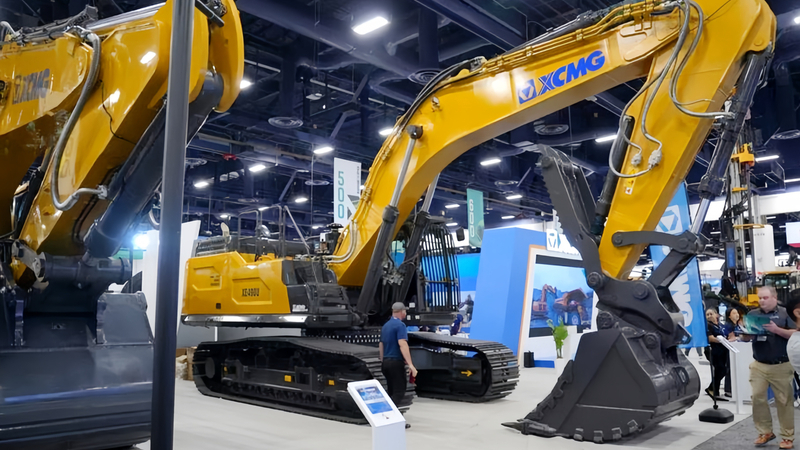
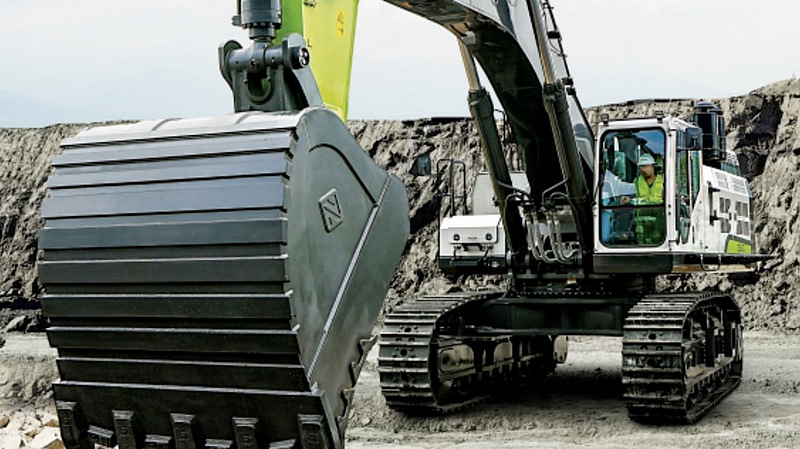
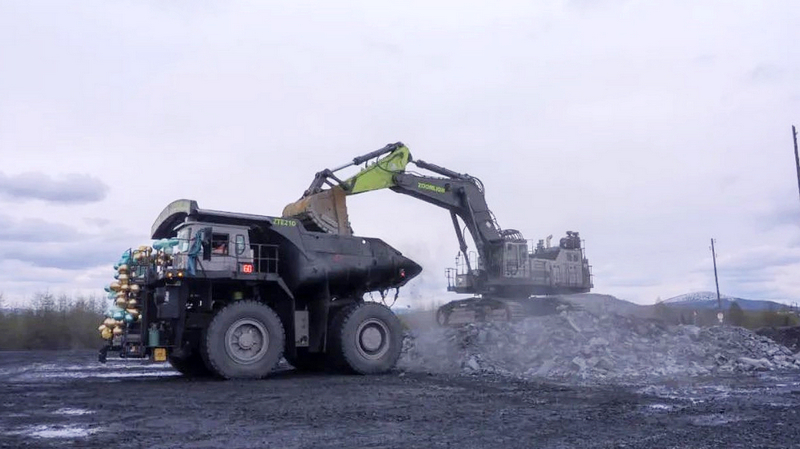
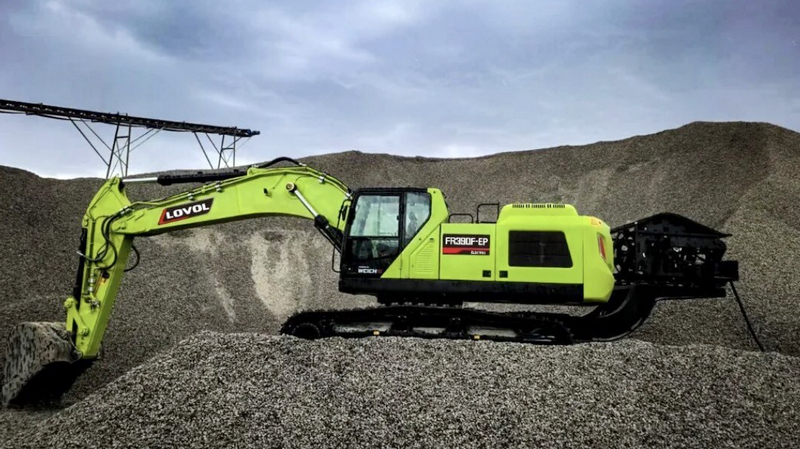
During excavator operations, the swing
motion is one of the most common and representative core functions. Through
swinging, the machine can quickly transfer materials, significantly improving
construction efficiency. However, the swing area is also one of the zones with
the highest incidence of accidents. Proper operation and scientific maintenance
are key to achieving both high efficiency and safety.
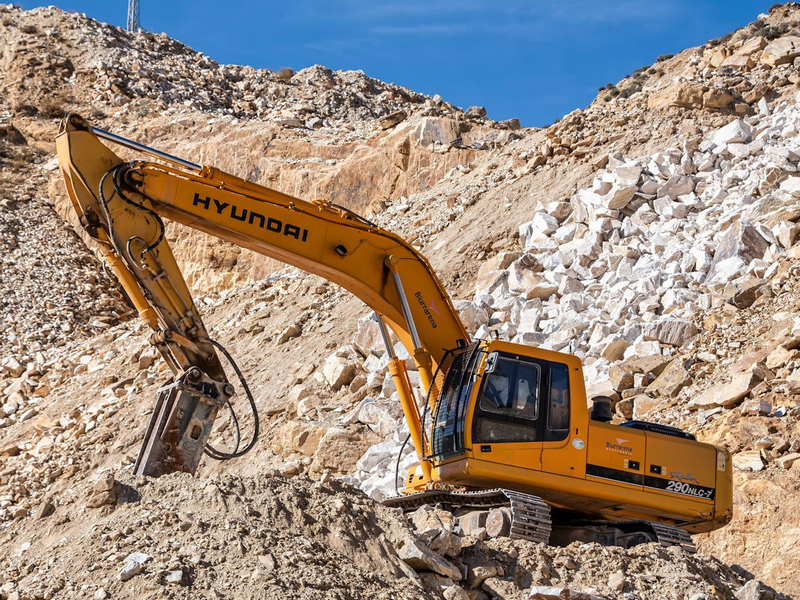
I. Pre-operation: Ensure a Safe Work Environment
Before initiating the swing motion,
prioritize confirming the safety of the work environment. Check whether there
are any personnel or obstacles within the swing radius to avoid the risk of
collisions in blind spots or the rear area. In multi-machine coordination or
complex working conditions, it is recommended to assign a signal person to
provide guidance and ensure smooth communication. Through advance confirmation
and thorough observation, safety hazards during the initial stage of rotation
can be effectively minimized.
II. During Operation: Maintain Smooth Movement
The core of rotation operation lies in
“smooth control.” When initiating rotation, move the control lever slowly to
avoid sudden acceleration that could cause the machine to sway or material to
spill; When stopping, decelerate in advance and brake gently to minimize impact
on the hydraulic system. Under heavy-load conditions—especially when the bucket
is fully loaded or the lifting height is high—avoid rapid rotation to prevent
the risk of overturning caused by a shift in the center of gravity. Smooth
control throughout the entire process can significantly enhance operational
safety and equipment stability.
III. Post-Operation: Proper Locking and Position Adjustment
After completing operations, lock the
equipment immediately. Lower the pilot lock lever to prevent accidental
rotation caused by inadvertent contact with the control lever. After working in
narrow or confined spaces, adjust the upper structure to a reasonable position
and plan the rotation path for the next startup to avoid spatial interference
or equipment collisions. Proper post-operation procedures help enhance overall
operational safety and continuity.
IV. Maintenance and Lubrication
The slewing bearing is a critical
load-bearing component of the excavator, and its operating condition directly
affects slewing performance. During routine maintenance, key components of the
slewing system should be inspected regularly. If abnormal noises or rough
operation are detected, they should be promptly investigated and addressed. At
the same time, the lubrication system must be kept in good condition.
Lubrication points should be cleaned regularly and grease replenished to ensure
adequate lubrication of the ring gear and related components. Through
continuous maintenance, service life can be effectively extended, and smooth,
stable rotation maintained.

+86-21-6212-0109
+86-21-6212-0109
+86-188-0523-6192
+86-136-6172-8724
Suite 2107, Gubei International Fortune Center, No. 1438 Hongqiao Road, Changning District, Shanghai 200336, China